Golf Rain Jackets: What Actually Keeps You Dry on the Course
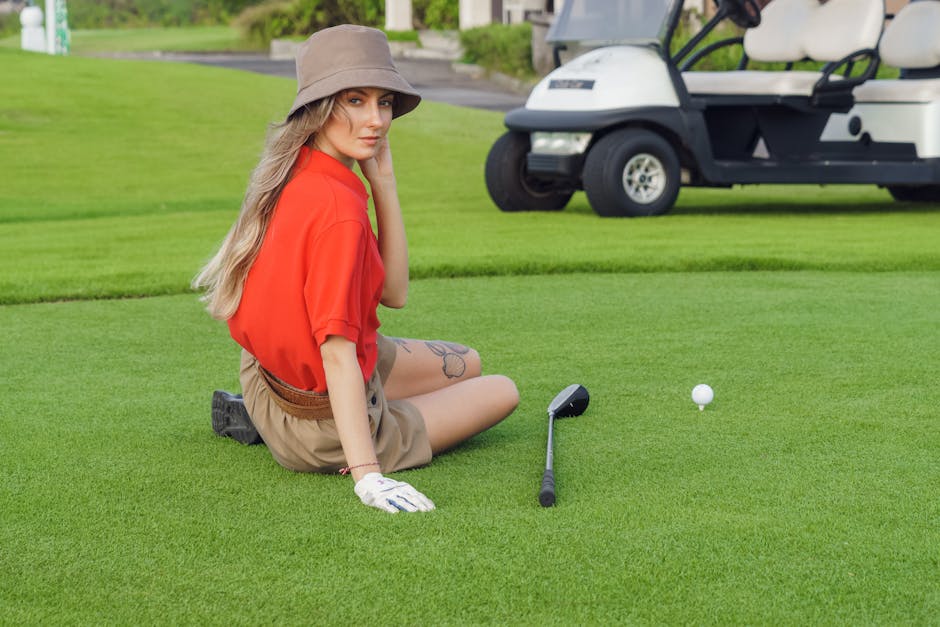
Picture standing over a 3-foot putt in steady rain, your back layer soaked through, shoulders locked up because your jacket is fighting your swing. That’s what buying the wrong rain gear looks like. This guide breaks down what actually matters — specs, swing mechanics, and specific products — so you don’t waste money on something that fails when the weather turns.
Why Most Waterproof Jackets Fail Golfers Specifically
Golf creates a unique problem for outerwear designers. You’re bent at the hips, rotating 90 degrees through impact, walking five miles over four hours — often through temperature swings of 10-15 degrees between morning and afternoon. A jacket built for hiking simply won’t survive that combination without compromising something important.
Three things separate a real golf rain jacket from everything else.
Cut is the first. Golfers address the ball in a forward-bent posture. A jacket designed for upright movement rides up at the back hem the moment you take your stance, leaving your lower back exposed to rain exactly when you don’t want it. Golf-specific jackets feature a longer rear hem — sometimes called a “golf tail” — and a curved hem that accounts for setup posture without bunching at the front.
Stretch is the second issue. The golf swing demands roughly 90 degrees of shoulder rotation. Non-stretch fabrics restrict that motion actively — you feel it as tightness across the upper back at the top of the backswing. The best golf jackets use 4-way stretch panels positioned across the back and under the arms to let the swing happen without fighting the fabric. Premium options use stretch throughout the entire shell.
Breathability is the third, and the one most buyers ignore until they’ve already made a bad purchase. Waterproof fabrics seal out rain — but they also trap heat if they can’t exhaust moisture vapor. The technical measurement is MVTR (Moisture Vapor Transmission Rate), expressed in grams per square meter per 24 hours. Anything below 10,000 g/m²/24h will feel suffocating on a warm wet day. Performance that works during a four-hour round starts at 20,000. GORE-TEX Pro membranes measure 28,000+. Many budget jackets don’t publish this number at all. That absence is worth noting.
Water-Resistant vs. Waterproof — Know the Difference
Water-resistant means DWR (Durable Water Repellency) coating. Droplets bead off the surface in light drizzle for maybe 20-30 minutes. True waterproofing requires a sealed membrane — GORE-TEX, eVent, HydroLite, or equivalent. Many jackets marketed as “waterproof” are DWR-only. The marketing language often blurs this line deliberately. Check whether the product description mentions an actual membrane, and look for hydrostatic head pressure ratings in millimeters. 10,000mm is the industry baseline. Golf conditions in real rain warrant 20,000mm or higher.
Seam Sealing — Where Cheap Jackets Leak First
Even a fully waterproof fabric has a vulnerability: seams. Every point where panels are stitched together is a potential water entry point under sustained rain pressure. Fully taped seams means all seams are sealed — the gold standard. Critically taped seams means only the main structural seams are protected; shoulder and pocket seams may not be. No seam sealing means water will eventually penetrate regardless of how waterproof the fabric itself is. For serious wet weather golf, fully taped seams matter more than the brand name on the chest.
The Specs That Determine On-Course Performance
Here’s how golf rain jacket price tiers compare across the metrics that actually affect a round:
| Specification | Budget ($80-130) | Mid-Range ($130-250) | Premium ($300+) |
|---|---|---|---|
| Waterproofing (mm) | 10,000-15,000 | 15,000-20,000 | 20,000-28,000+ |
| Breathability (MVTR g/m²/24h) | Often unlisted | 10,000-20,000 | 20,000-28,000+ |
| Seam Sealing | Critical or none | Critical to full | Fully taped |
| Stretch | Minimal, stiff | 2-way or 4-way panels | 4-way throughout |
| Weight | 400-600g | 250-400g | 150-300g |
| Packability | Bulky, separate bag | Packs into chest pocket | Ultra-compact stuff sack |
| Swing Freedom | Noticeably restricted | Moderate to good | Unrestricted |
| Expected Lifespan | 1-3 seasons | 3-5 seasons | 5-10+ seasons |
The performance jump from budget to mid-range is larger than mid-range to premium. A $150 golf rain jacket outperforms most $80 options in every meaningful category. The premium tier is about extreme condition reliability and long-term durability, not a dramatic leap in average-day performance.
Golf Rain Jackets Worth Buying
Four specific picks across price points — with honest assessments of where each falls short.
FootJoy HydroLite Speed — around $150
The most consistently recommended mid-range golf rain jacket available. FootJoy’s proprietary HydroLite membrane delivers around 15,000mm waterproofing with critically taped seams — not GORE-TEX, but more than adequate for typical golf rain conditions. The HydroLite Speed is cut slim with a golf-specific rear hem and 4-way stretch panels across the back and shoulders. It packs into its own chest pocket, useful when weather is unpredictable and you need to carry it without adding a bag. Weight lands at approximately 280g.
The limitation: it runs slim. Players who typically wear XL or plan to layer a mid-layer underneath should size up by one. Breathability measures around 15,000 MVTR — functional but not exceptional. On warm rainy days above 65°F, you’ll notice it. For most golfers playing in moderate, cool rain, this is the clearest value pick under $200.
Galvin Green GORE-TEX Jacket (LEWIS or WADE) — $450-550
Galvin Green’s GORE-TEX line uses GORE’s 3-layer laminate construction — fully taped seams, 28,000+ MVTR, and 4-way stretch woven throughout the entire shell, not just panel inserts. The swing freedom difference between this and mid-range options is real and noticeable once you’ve played a round in both. The articulated sleeve construction specifically accounts for the golf address and follow-through positions in ways generic outdoor jackets never do.
The LEWIS model is the standard unlined shell for mild to moderate temperatures. The WADE adds a soft lining suited for cold, wet rounds above about 40°F. Choose based on your typical playing climate.
This isn’t an impulse buy. But if you play 50+ rounds a year in genuine rain, the math changes. A $500 jacket lasting 8-10 seasons with proper care costs less per season than two $150 jackets replaced every 2-3 years. The quality is not marketing language — it shows in the seam construction and fabric hand the first time you wear it.
Adidas Provisional Rain Jacket — around $120
Adidas uses 3-layer construction here with 20,000mm waterproofing and critically taped seams. Lighter than it looks at around 270g, and packability is excellent — compresses to roughly the size of a large apple. Shoulder mobility is good for the price. Breathability is acceptable in cool conditions, and the slim cut doesn’t fight the swing.
The honest limitation: durability. Zippers stiffen after a season or two of regular use, and the DWR coating degrades faster than the FootJoy or Galvin Green alternatives. For golfers playing fewer than 10 wet rounds per year, the Adidas Provisional is a smart, affordable choice. Heavier use — spend the extra $30 on the FootJoy.
Under Armour Stormproof 2.0 — around $130
UA Storm technology repels water effectively in light to moderate conditions. The stretch is genuinely impressive for the price — the Stormproof 2.0 moves better through the swing than several jackets twice its cost, making it a smart pick for golfers who prioritize swing freedom over heavy-rain protection. The honest caveat: this is water-resistant, not fully waterproof. In sustained rain exceeding 20-30 minutes, water begins to penetrate. Seams are not fully taped. Treat the Stormproof 2.0 as a versatile light-rain and wind layer, not a heavy-duty waterproof shell.
Four Buying Mistakes That Cost Golfers Money
- Buying a hiking or ski jacket instead of a golf-specific cut. Arc’teryx, Patagonia, and similar outdoor brands make excellent waterproof jackets — for hiking. They’re cut for upright movement with a straight back panel. That panel pulls tight and rides up the moment you take a golf stance. It’s geometry, not quality. A Patagonia Torrentshell will measurably restrict your backswing. Golf-specific cuts are different in ways only visible when you swing in them.
- Ignoring breathability ratings. A 10,000mm waterproof jacket with no published MVTR keeps rain out and traps your body heat at anything above 55°F. You end up soaking wet from the inside out. The jacket succeeded at its stated job. The job was just too narrow. Always look for MVTR alongside waterproofing. If the product page doesn’t list it, that’s a meaningful signal.
- Buying your regular size without accounting for layering. Golf rain jackets go over a base layer, sometimes over a mid-layer fleece. Buy your standard shirt size and you’ll feel constricted under wet conditions. Most manufacturers recommend sizing up one from your base layer size. When uncertain, try the jacket on over a light fleece before purchasing — especially when buying online.
- Neglecting DWR maintenance. Even premium GORE-TEX jackets lose their surface bead-off when DWR coating wears down after repeated washing and use. The waterproof membrane underneath still functions — but without the surface treatment, the outer fabric gets saturated and feels wet. The fix takes 20 minutes: wash with Nikwax Tech Wash, then tumble dry on low or apply Nikwax TX.Direct spray. Most golfers blame the jacket and replace it. Restore the DWR first.
When You Don’t Actually Need a Golf Rain Jacket
If you play fewer than 8 rounds per year in actual rain and your climate produces mostly warm summer drizzle — a quality DWR-treated wind jacket is enough. The Callaway Golf Windbreaker (around $75) or a Nike Repel layer handles light precipitation without the bulk, cost, or heat trap of a full waterproof shell. Don’t overbuy for conditions you don’t actually face.
How to Test Fit Before You Commit
Online purchases make fit testing harder. Three quick checks catch most problems before a return becomes necessary.
The Reach Test
Put the jacket on over whatever you’d typically wear on the course. Reach both arms forward and upward at a 45-degree angle, mimicking a follow-through extension. If the jacket rides up past your beltline at the back, the cut doesn’t account for golf posture. This exposes your lower back to rain precisely when you’re most extended through the shot.
The Rotation Test
Zip the jacket fully. Cross both arms over your chest and twist 45 degrees to each side. You should feel zero resistance across the upper back. Any pulling or tightening across the shoulder blades at even partial rotation means the jacket will interfere with your backswing over 18 holes. Non-stretch and single-layer fabrics fail this test consistently. Jackets with isolated stretch panels sometimes fail it too if the panels are positioned incorrectly.
The Packability Check
A golf rain jacket that’s a hassle to carry won’t make it onto the course. Does it compress into its own chest pocket, or a stuff sack no larger than a softball? Jackets in the 250-350g range almost always do. Above 400g, you’re usually carrying it separately — which means it stays in the car when the forecast looks uncertain. Packability determines whether the jacket actually gets used.
The Right Pick for Each Type of Golfer
Casual golfer (under 15 rounds/year, occasional rain): Adidas Provisional Rain Jacket at $120. Functional waterproofing, light enough to carry without thinking about it, and the lower price makes sense for the frequency of use.
Regular golfer (25-50 rounds/year, moderate rain exposure): FootJoy HydroLite Speed at $150. Best balance of waterproofing, breathability, swing freedom, and packability at the price. The right call for most golfers.
Serious or competitive golfer (50+ rounds/year, plays in any conditions): Galvin Green GORE-TEX — LEWIS for mild climates, WADE for cold and wet. The performance difference is genuine, the durability pays back the price over time, and swing freedom at this level is categorically different from everything below it.
Players who mainly face light drizzle and wind: Under Armour Stormproof 2.0 at $130, or an honest DWR wind jacket at $75-100. Matching the gear to the conditions is always smarter than buying for the worst-case scenario you’ll see twice a decade.
Golf outerwear has improved faster in the last decade than almost any other equipment category. The bulky, stiff rain suits that turned every swing into a guess are mostly gone — at least once you move past the entry level. Lightweight membrane technology is pushing fully waterproof jackets below 200g without sacrificing breathability. What used to require a $500 investment is gradually becoming the mid-range standard. The gap is still closing.